
RSEF2026
My Congress
Login Here
Login Here
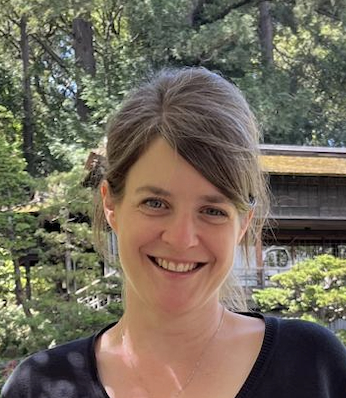
German physicist whose research centers on analog quantum simulation with ultracold atoms in optical lattices. Her group explores strongly correlated many-body systems in and out of equilibrium, specifically quantum thermalization and its breakdown, topological phases of matter, and lattice gauge theories. More recently, she is developing new techniques for transforming neutral-atom systems from analog quantum simulators into programmable, computationally powerful architectures—paving the way for deeper understanding of complex quantum matter and the development of precision-controlled quantum technologies.
She studied physics at LMU Munich, where she received her PhD in 2015 for pioneering work on artificial gauge fields with ultracold atoms. After a postdoctoral appointment at the Collège de France, she returned to LMU in 2017 as a group leader. In 2018 she was awarded an ERC Starting Grant, and in 2019 she was appointed as professor for Synthetic Quantum Matter at LMU. Since 2023, she has also been a W2 Research Group Leader at the Max-Planck-Institute of Quantum Optics.
Her scientific achievements have been recognized with numerous distinctions, including the Alfried Krupp Award for Young University Teachers, the Klung-Wilhelmy Science Award, the TOPTICA Junior BEC Award, and the Princess Therese of Bavaria Award. She is a member of acatech – the National Academy of Science and Engineering – and contributes to national research policy as a member of the BMBF/BMFTR Program Committee for Quantum Systems.
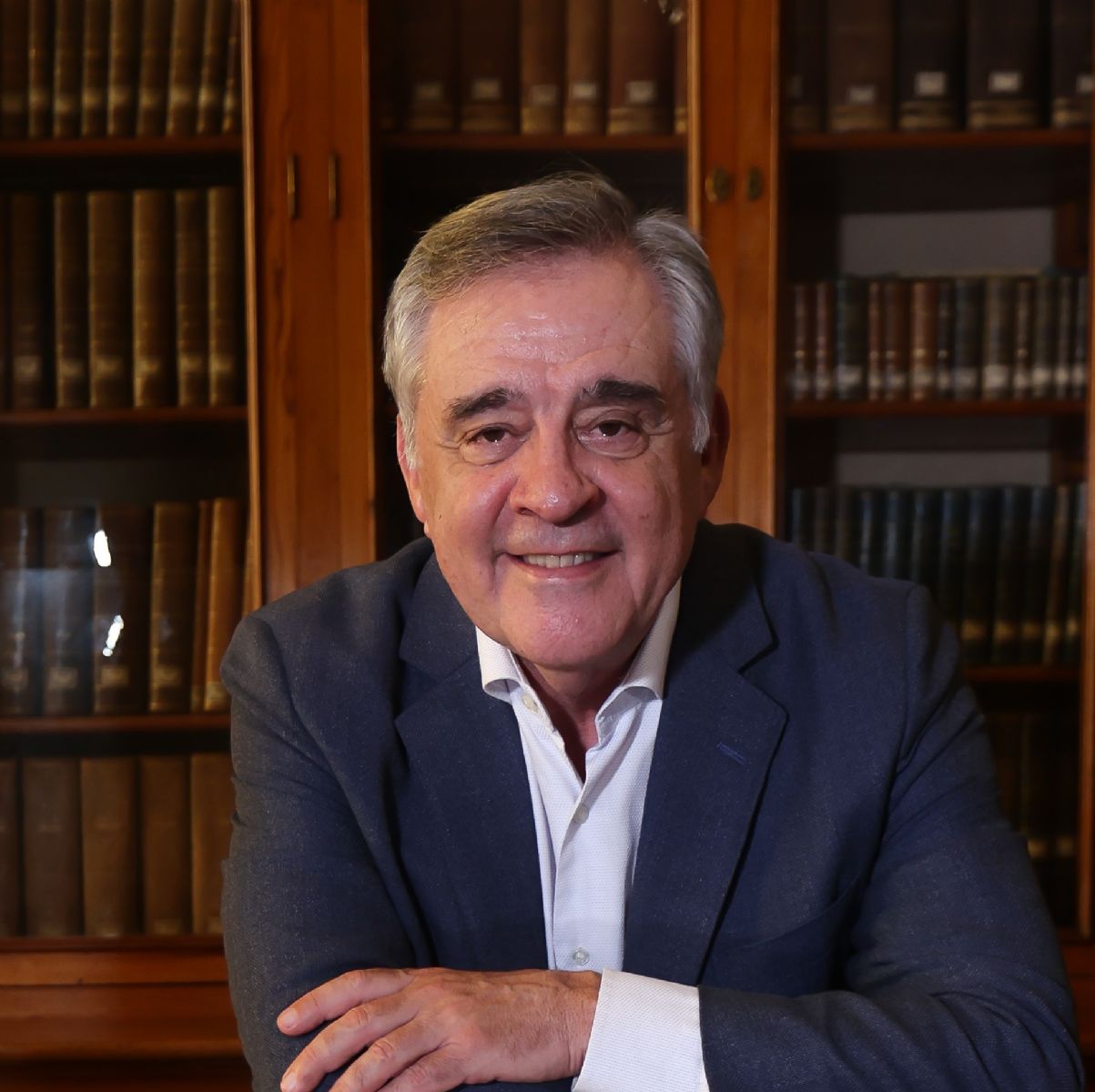
Astronomer and Director of the National Astronomical Observatory (IGN). He is a specialist in star formation and planetary nebulae, fields in which he has published around 350 scientific papers that have received more than 20,000 citations in the specialized literature (h-index = 80). Among his scientific achievements are the discovery of some of the youngest known protostars and the detection and characterization of molecular gas in planetary nebulae.
He is or has been involved in several projects for the development of major astronomical facilities, such as the Yebes radio telescope, the IRAM observatories, the HERSCHEL space telescope, and the giant radio telescopes ALMA and SKA. He has been a member of the governing boards of ALMA, the European Southern Observatory (ESO), and the SKA. He is currently a member of the IRAM Governing Board, Secretary of the National Astronomy Commission, and President of the National Commissions for the 2026, 2027, and 2028 eclipses.
Bachiller is deeply engaged in science outreach, both through the Royal Astronomical Observatory of Madrid and through his participation in various media outlets. He has received several awards, notably the Community of Madrid Award for the Communication of Science in Spanish and the CSIC–FBBVA Award for Scientific Communication. He is a member of the Royal Academy of Doctors of Spain and has been awarded the Commander’s Cross of the Order of Civil Merit.
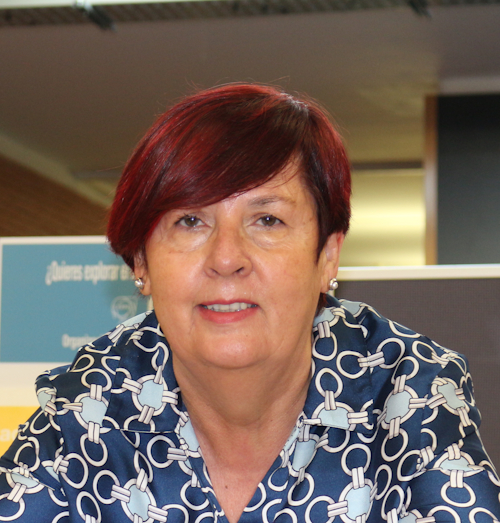
Research professor at the Institute of Corpuscular Physics, received the 2024 Blas Cabrera National Research Award in the category of Physical Sciences of Materials and Earth. She holds a PhD in Physics from the University of Valencia. Specializing in experimental particle physics, her work focuses on the construction and operation of large detectors and the analysis of vast amounts of data, always within the framework of major international collaborations. She completed her doctoral thesis on the Soudan-II experiment in Minnesota and later worked on the two major accelerators at CERN (Switzerland): the DELPHI experiment at the LEP accelerator and the ATLAS experiment at the LHC. Undoubtedly, her most notable contribution has been her involvement in the ATLAS experiment, where she contributed to the development and construction of the inner tracking detector, which stands at the forefront of technology.
In addition, Carmen García has held several leadership positions, including Deputy Director of IFIC, Coordinator of the Physics and Physical Technologies Area of the Spanish National Research Council (CSIC), Deputy Coordinator of the Global Matter Area (also at CSIC), and member and Chair of the CSIC Commission on Large Scientific Infrastructures. From the field of basic science, she has contributed to various technological developments and is the founder of the technology-based company Alibava Systems. She is the author of several patents, numerous scientific publications, and has served as principal investigator on many research projects.
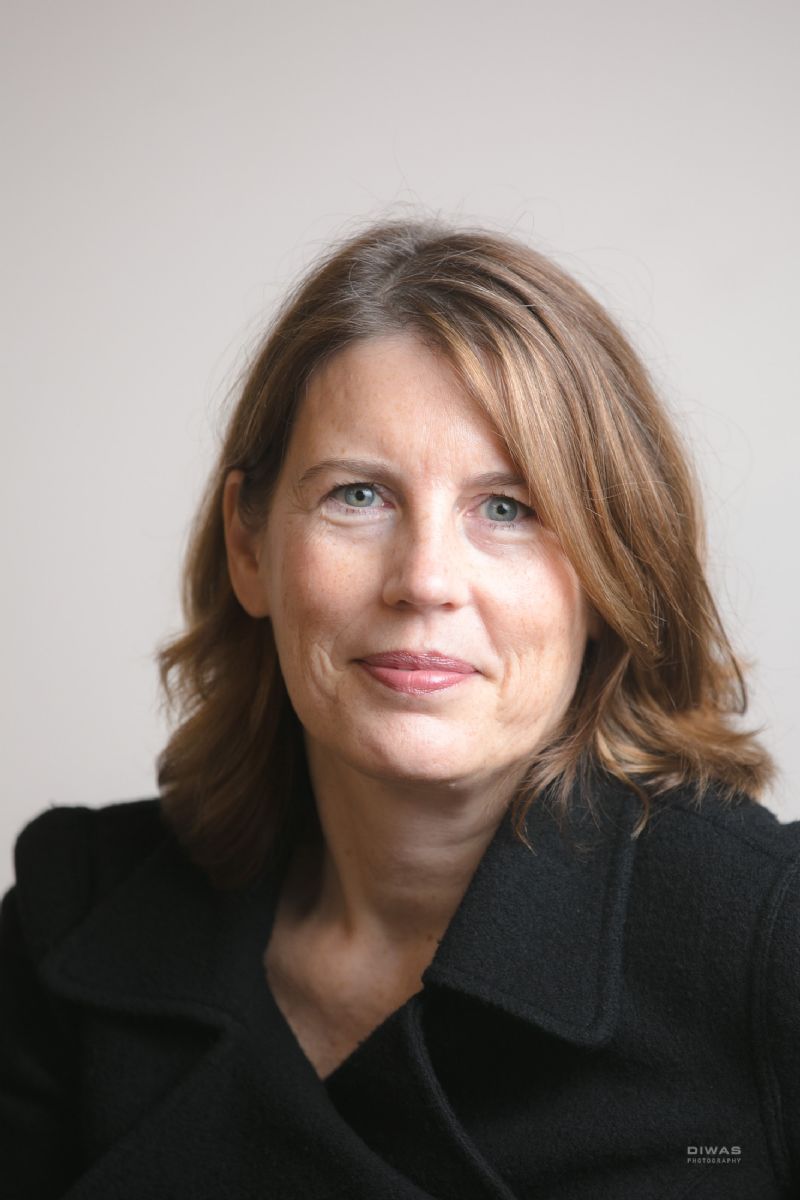
Professor of Physics at the University of Washington. She holds a Ph.D. in physics from the University of Western Ontario. Dr. Heron’s research focuses on the development of conceptual understanding and reasoning skills. Dr. Heron is co-Founder and co-Chair of the biannual “Foundations and Frontiers in Physics Education Research” conference series, the premier North American venue for physics education researchers. She has held leadership roles in the American Physical Society (APS), the American Association of Physics Teachers (AAPT), and the European Physics Education Research Group (GIREP) and serves as an Associate Editor of Physical Review – PER. She co-edited the first International Handbook on Physics Education Research (AIP, 2023). She is a Fellow of the APS, a co-recipient of the APS Education award, recipient of the Homer Dodge Citation for Outstanding Service to the AAPT and the International Commission on Physics Education of IUPAP Medal.
Head of the Science Division of the ITER Organization, a member of the European, Spanish, and American Physical Societies, and a Fellow of both the Institute of Physics (UK) and the American Physical Society.
He has served as co-chair of several International Tokamak Physics Activity (ITPA) topical groups, including Peripheral Plasma Physics and Divertor Physics, Edge and Pedestal Plasma Physics, and Transport and Confinement. He also served as Secretary of the ITER Council Science and Technology Committee from 2008 to 2019. He played a key role in the development of the physical basis for the ITER tokamak design and in the planning of its scientific exploitation, notably the ITER Research Plan.
He carried out his doctoral research at the Joint European Torus, where he also completed his postdoctoral research. He later joined the Close Support Unit of the European Fusion Development Agreement (EFDA) programme at the Max Planck Institute for Plasma Physics, where he was responsible for the EFDA Technology Programme in the area of plasma–wall interactions for ITER. In 2008, he joined the Science Division of the ITER Organization.
His research has focused on the characterization and control of steady-state and transient power fluxes to tokamak plasma-facing components, and on issues related to the integration of high-confinement plasmas with edge plasma requirements for power and particle exhaust. He has delivered 33 invited talks at international conferences and meetings and is co-author of 804 peer-reviewed publications, of which he is the lead author of 33. According to Web of Science, his publications have received 31,178 citations, and his h-index is 78.
Alexander von Humboldt Professor of Physics at Johannes Gutenberg Universität Mainz and director of the Spin Phenomenal Interdisciplinary Center (SPICE), and a Senior Professor at the Texas A&M University. He has received the Alexander von Humboldt Professorship Award, the Johannes Gutenberg Research Fellowship, the ERC Advance Synergy Grant, National Science Foundation’s Career Award, the Cottrell Scholar Award, and is a Fellow of the American Physical Society. Research highlights include the discovery of intrinsic spin Hall effect and development of a complete theory of anomalous Hall transport, prediction of the Néel spin-orbit torque for the electrical manipulation of antiferromagnets, and the discovery of altermagnetism (even-parity wave collinear magnetism), and unconventional odd-parity wave magnetism.
Marie Vidal is an engineer in Physics, from PHELMA (Grenoble, France), who entered the world of particle therapy during her Master thesis in Siemens Particle Therapy (Erlangen, Germany). She consequently did her PhD in the Institut Curie Protontherapy Center of Orsay (France) about proton dose calculation algorithm and Monte Carlo simulations. Then, she graduated as a medical physicist after her residency in Institut Universitaire du Cancer of Toulouse (France). After a 3 years post-doc in the Complutense University of Madrid (Spain) about dose calculations with analytical algorithms and Monte-Carlo simulations for X-rays intra-operative radiation therapy, she came back to France to work in Centre Antoine LACASSAGNE in Nice (France) hosting the first high energy protontherapy machine Proteus®ONE (IBA). Since then, she is involved in commissioning, QA, dosimetry and treatment planning in the clinics, and leads several projects in collaboration with French and international research laboratories about proton imaging and dosimetry. She is now Head of Medical Physics of the Institut Méditerranéen de Protonthérapie and she holds the Habilitation à Diriger des Recherches from the University Côte d’Azur (Nice, France). She is a PTCOG steering committee member, also involved in ESTRO-EPTN as co-chair of the Patient Specific QA working group within EPTN WP2 as well as in IAEA recommendations writing groups.
Xavier Moya is a Professor of Materials Physics in the Department of Materials Science & Metallurgy at the University of Cambridge. He completed a BA in 2003, and a PhD on magnetic shape memory alloys in 2008, at the Physics Department in the University of Barcelona. He then moved to Cambridge in 2008, where he works on the thermal properties of materials, focusing on phase transitions involving structural, electrical and magnetic degrees of freedom. Possible applications include environmentally friendly solid-state cooling and heating, and to this end he launched the start-up Barocal Ltd in 2019.
Xavier was awarded the Ramon Margalef Prize in 2009, the Spanish Royal Society of Physics Young Researcher in Experimental Physics Prize in 2015, and the Society of Spanish Researchers in the UK Emerging Talent Award in 2017. He is a member of the UK Young Academy, the International Science Council’s global roster of experts, and a Bill Gates’ Breakthrough Energy Fellow. In 2025, he was named an APS Fellow.
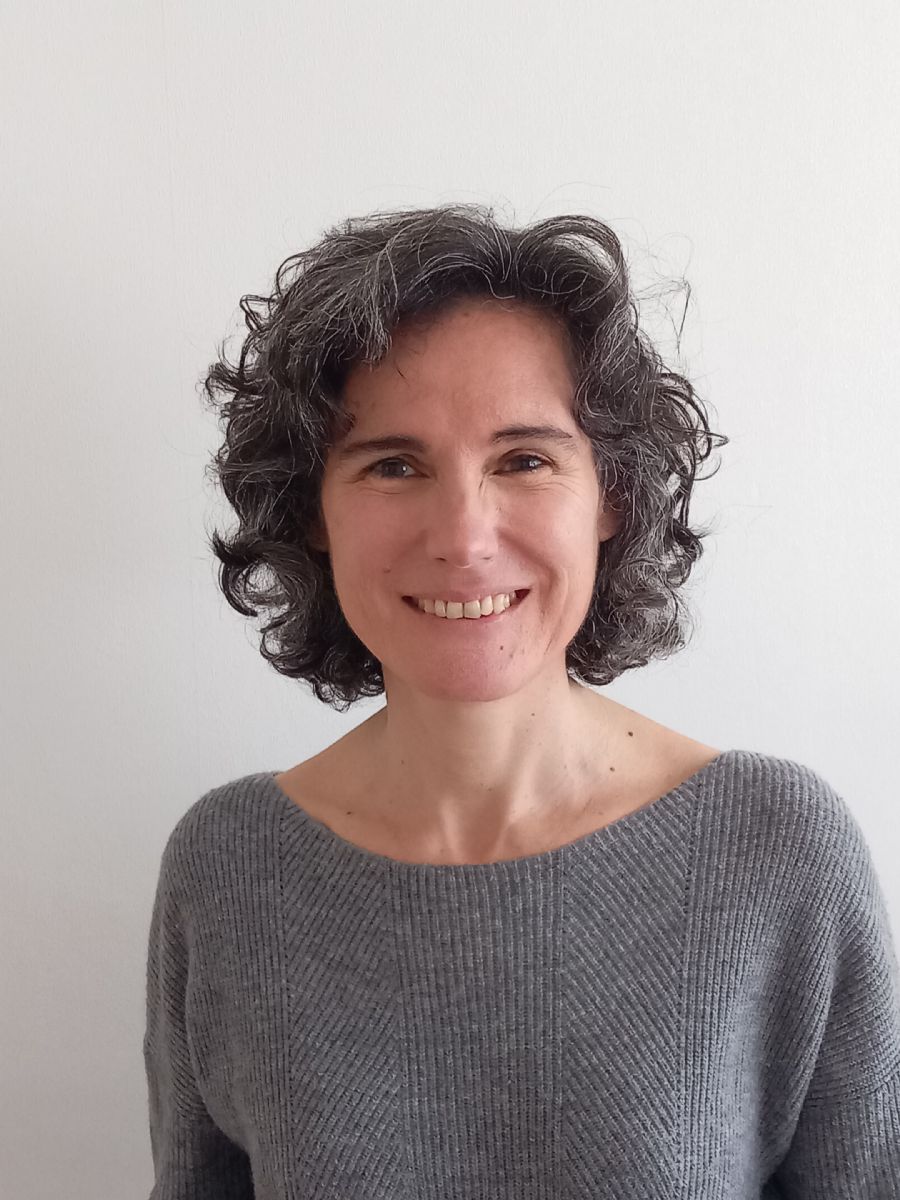
She studied physics at the Universidad Autónoma of Madrid and completed her PhD at the GSI heavy-ion accelerator in Darmstadt, Germany. Following a two-year postdoctoral fellowship at the GANIL heavy-ion accelerator in Caen, France, she was recruited by the French National Centre for Scientific Research (CNRS). She is currently a CNRS research director at the LP2I laboratory in Bordeaux, France.
She specializes in nuclear reactions and the development of indirect methods to measure neutron-induced cross sections of radioactive nuclei, particularly the surrogate-reaction method. These cross sections are essential for astrophysics and nuclear technology applications. She has also conducted extensive research into nuclear fission through experiments and modelling. She proposed studying surrogate reactions and nuclear fission at heavy-ion storage rings, enabling the investigation of nuclear reactions involving highly radioactive nuclei with unparalleled precision. In 2020, she was awarded an ERC Advanced Grant to develop this idea within the NECTAR project. The first experiments, carried out at GSI in 2022 and 2024, have proven the effectiveness and great potential of NECTAR. For this work, she was awarded the 2024 Joliot-Curie Prize and the CNRS Silver Medal in 2025.
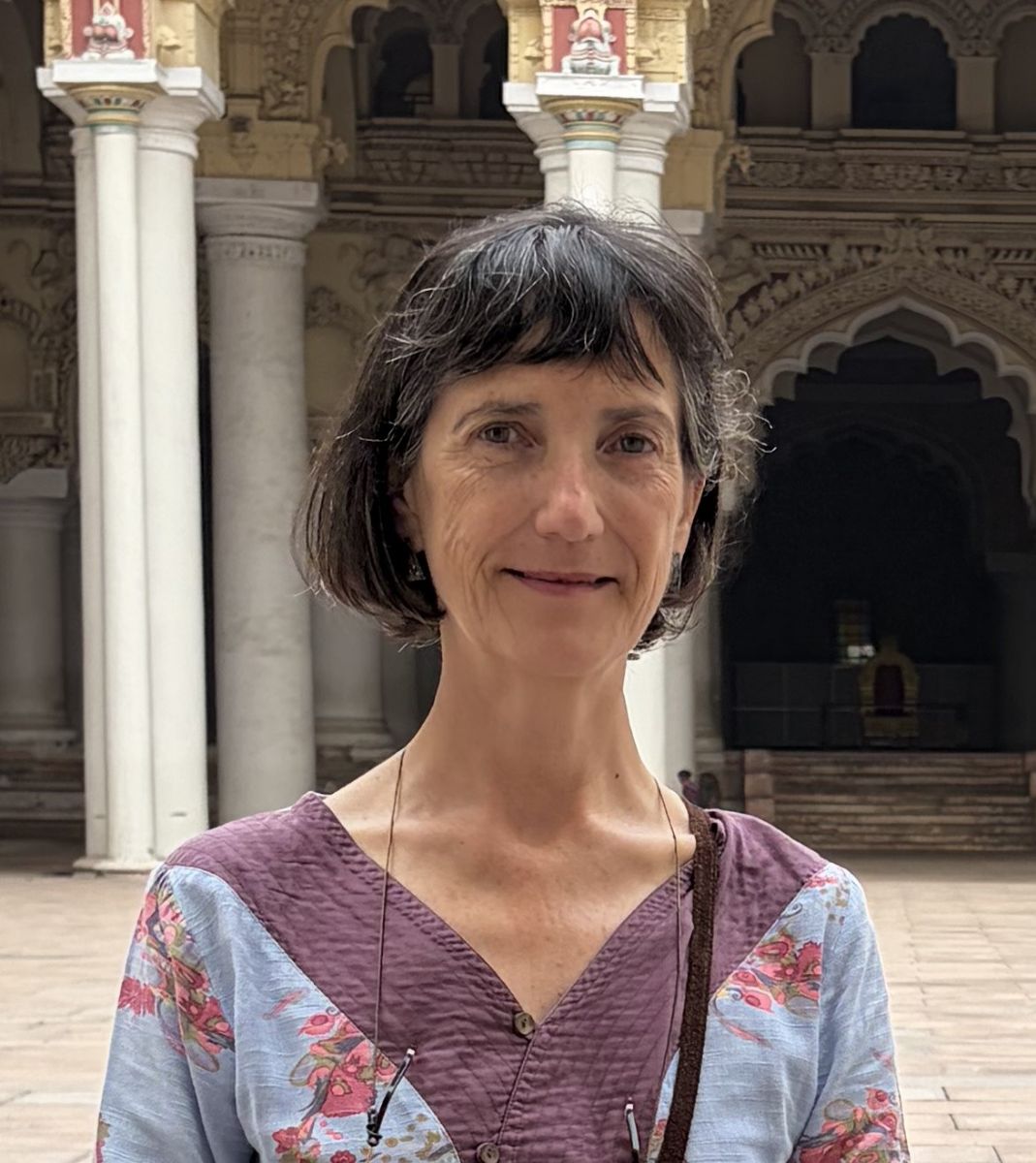
Since 2009, Arantxa Arbe has been a Research Professor at the Spanish National Research Council (CSIC) at the Materials Physics Center (joint CSIC–University of the Basque Country EHU) in San Sebastian, Spain. She obtained her PhD (1990–1994) at EHU under the supervision of Prof. Colmenero, combining dielectric spectroscopy and neutron scattering to investigate polymer dynamics. She carried out postdoctoral research at Forschungszentrum Jülich, Germany (1994–1996), where she developed strong expertise in scattering techniques. Her work was recognized with the Young Scientists Award of the European Neutron Scattering Association (1996). She subsequently joined the San Sebastian group, leading the application of scattering techniques.
Her research focuses on the structural and dynamical properties of soft matter systems, primarily polymers of increasing complexity (homopolymers, blends, solutions, nanocomposites, nanostructured systems, and polymeric nanoparticles). She has authored over 250 publications in international journals.
She has served on the Scientific Advisory Committees of major neutron facilities, including the Heinz Maier-Leibnitz Zentrum (Garching), the European Spallation Source (Lund), and the Institut Laue-Langevin (Grenoble), and has participated in numerous proposal review panels, including as chair.
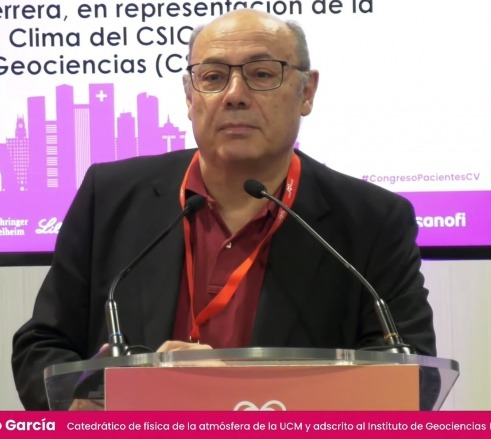
Full Professor of Atmospheric Physics at the Complutense University of Madrid and Senior Researcher at the Institute of Geosciences (IGEO, CSIC-UCM), he has authored more than 200 articles in indexed journals (SCI). Throughout his career, he has supervised 15 doctoral theses and served as Principal Researcher for numerous national and international research projects. His primary research interests include climate variability, the analysis and modeling of meteorological and climate extremes, climate change attribution and its cross-sectoral impacts, and the modulation of atmospheric composition by meteorological factors.
In 2023, he was awarded the Distinguished Career Medal by the Atmospheric and Ocean Physics Specialist Group (GEFAO) of the Royal Spanish Society of Physics (RSEF). He possesses extensive executive experience in various institutions, having served as President of the State Meteorological Agency (AEMET), Vice-President of the Council of the European Centre for Medium-Range Weather Forecasts (ECMWF), and a member of the Executive Council of the World Meteorological Organization (WMO). Within the Complutense University of Madrid, he has held the positions of Director General of the UCM General Foundation and Chair of the Department of Earth Physics and Astrophysics.
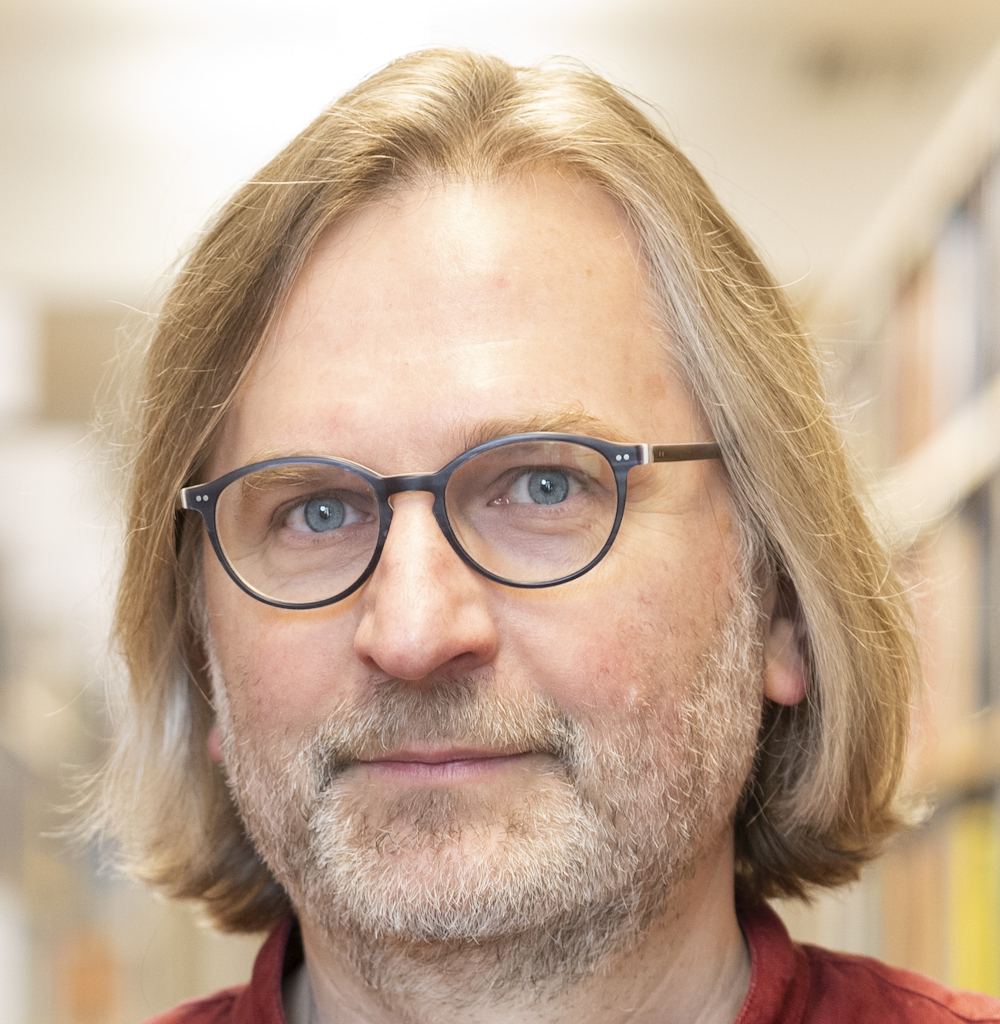
Senior researcher at the Max Planck Institute for Mathematics in the Sciences (MPI MiS) leading a group on computational social science. He has a PhD degree in theoretical physics and has been working on several aspects of complex systems theory, such as information decomposition, complex networks, game theory, and mathematical modelling of social dynamics and communication with a focus on data analysis. He was the coordinator of the HORIZON Europe projects ODYCCEUS ("Opinion dynamics and cultural conflict in European Spaces", 2017 - 2021) and SoMe4Dem ("Social Media for Democracy - Understanding causal mechanism of digital citizenship", 2023 - 2026).
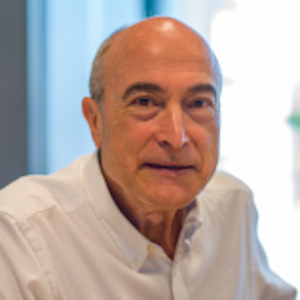
Full Professor of Organic Chemistry at Complutense University of Madrid and co-founder and Deputy Director of the IMDEA Nanoscience Institute of the Community of Madrid. His research spans multiple areas of organic and materials chemistry, with a particular focus on carbon nanostructures in the context of chirality, electron transfer, and applications in biomedicine, photovoltaics, and nanoscience.
He has supervised more than 50 PhD theses and is co-editor of six books and fourteen special issues in international journals. Prof. Martín serves on numerous scientific committees for national and international conferences and journals. He is a Fellow of the Royal Society of Chemistry (UK), a corresponding member of the Royal Academy of Doctors of Spain, and since 2015 a corresponding member of the Royal Academy of Exact, Physical and Natural Sciences of Spain. In recognition of his academic trajectory, he was awarded the UCM Medal for Teaching and Research Merit in 2026.
Prof. Martín has played a prominent role in the Spanish scientific community, serving as President of the Royal Spanish Chemical Society (2006–2012) and as President-elect of the Confederation of Scientific Societies of Spain (2015–2019). He has received many prestigious national and international awards, including the Jaime I Award for Basic Research, the Miguel Catalán Award of the Community of Madrid, the Research Award and Gold Medal of the RSEQ, the DuPont Research Award, the Alexander von Humboldt Award (Germany), and the Richard E. Smalley Award (USA). In 2020 he was honored with the Spanish National Chemistry Award “Enrique Moles.”
He has been awarded an ERC Advanced Grant (2013–2019) and an ERC Synergy Grant (2021–2027). Since 2018 he has been a member of the Academia Europaea and has been recognized as a Chemistry Europe Fellow (Wiley), distinctions that further highlight his international scientific leadership.
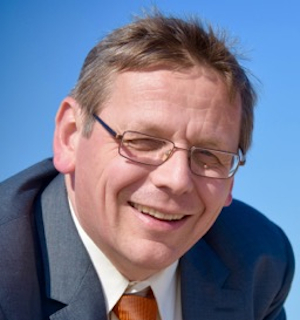
As veteran of the Synchrotron light exploitation, Klaus Attenkofer has actively participated on experiments at the second, third and now fourth generation storage rings. Starting his career in magnetism, he switched soon to a wider range of material sciences, including device related areas, and catalysis, always with the focus on finding new ways to provide the needed information, and not shy of developing new electronics, data acquisition systems, x-ray optics, detectors and methodologies, including the usage of data analytics approaches. Educated in the German system, Klaus has spent most of his scientific career in the US, working at the APS, the University of Chicago and NSLS-(I and II), before he moved to science management as Scientific Director of ALBA in 2019.
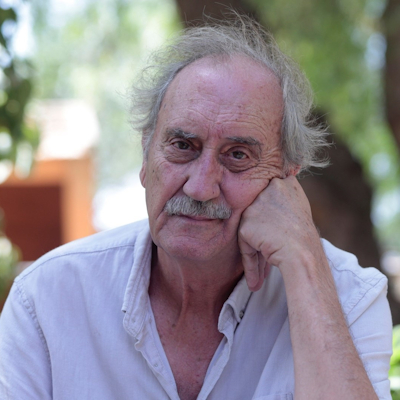
Manuel Luis Lozano Leyva (Sevilla, 1949) is a nuclear physicist, writer, and science communicator. He has been a Full Professor at the University of Seville since 1994, served as Professor Emeritus from 2019 to 2022, and is currently an Honorary Researcher. Throughout his career, he has undertaken research stays of varying duration at the Niels Bohr Institute in Copenhagen, at the Universities of Padua and Munich, and at CERN’s Department of Theoretical Physics as a Corresponding Fellow.
He began his studies in Physics at the University of Seville and completed his degree with a specialization in Fundamental Physics at the University of Zaragoza. After completing his doctoral thesis, which included a research stay at Oxford University (1979), he joined the University of Seville, where he led numerous publicly funded research projects. He is the author or co-author of more than 140 scientific articles in international journals.
Among his academic and administrative responsibilities are his roles as Vice-Rector for Research at the University of Seville (1988–1992), Director of the Department of Atomic, Molecular and Nuclear Physics (1993–2009), and Spanish representative to NuPECC (Nuclear Physics European Collaboration Committee) from 1996 to 2003. He was a driving force behind the creation of the National Accelerator Center between 1982 and 1991 and became its first director in 1996. From 2018 to 2020, he served as Director of ENUSA (Empresa Nacional del Uranio), and he is a member of the expert group of the Advisory Committee of the Nuclear Safety Council (CSN).
In addition to his scientific work, Manuel Lozano Leyva is a prominent science communicator. He has published essays and articles in national media outlets such as Público and El País. He has directed the book series Grandes Ideas de la Ciencia & Un paseo por el cosmos (RBA); written scripts for documentary films—including the 13-episode television science series Andaluciencia—and regularly participated in national and regional radio programs. He is also the author of 7 novels, some of them historical works set in the eighteenth century, as well as 6 essays and 4 popular science books.
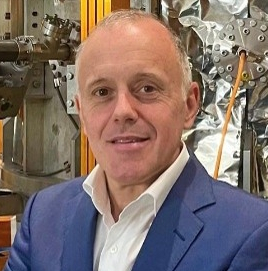
Manuel García Muñoz is Professor in the Department of Atomic, Molecular and Nuclear Physics at the University of Seville and co-leader of the Plasma Science and Fusion Technology Lab, which hosts the SMART tokamak.
With more than 25 years of experience, Manuel has contributed to major research programmes across many of the world’s leading tokamaks and stellarators, coordinating international experimental teams and driving technological innovation. He also serves as IEA Chair of Spherical Tori, helping to coordinate international activities in this field. His scientific work has accumulated more than 22,000 citations and an h-index of 74, and has earned him prestigious international distinctions, including the APS–EPS Landau–Spitzer Award. He also holds an ERC Advanced Grant supporting his research into next-generation fusion concepts
He earned his PhD from Ludwig Maximilian University of Munich and spent more than a decade at the Max Planck Institute for Plasma Physics before joining the University of Seville, where he continues to lead research in fusion plasma physics, diagnostics and next-generation tokamak concepts.